Evaluating the One Thought Line a Day Journal for KDP
The One Thought Line a Day Journal for KDP is a customizable digital template designed specifically for self-publishers utilizing Amazon’s Kindle Direct Publishing platform. Unlike pre-made physical notebooks, this product is a source file package that allows creators to generate their own low-content books. The resource is typically delivered in PDF, PPTX (PowerPoint), and Keynote formats, providing flexibility for users with different software preferences or operating systems. Its primary function is to serve as a foundational interior for journals focused on brevity, consistency, and daily reflection.
For individuals researching low-content publishing or seeking to expand their catalog, understanding the specific utility and limitations of this template is essential. This evaluation explores the structural components, customization capabilities, economic considerations, and practical applications to help determine if this asset aligns with specific publishing goals.
Structural Overview and Specifications
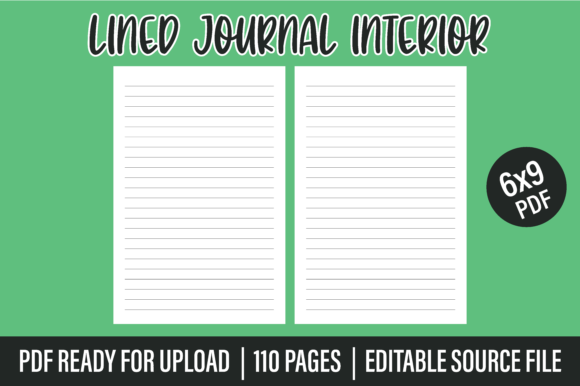
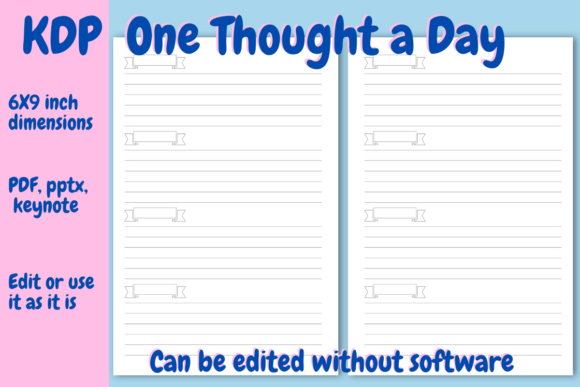
To accurately evaluate the One Thought Line a Day Journal for KDP, one must understand its physical and digital architecture. The template is formatted at 6x9 inches, which is an industry-standard trim size for trade paperbacks and personal journals. This dimension offers a balance between portability and sufficient writing space, making it a safe choice for market acceptance.
The interior layout is engineered for high-density content relative to standard lined journals. The document contains 103 pages in total, structured as follows:
- Title Page: A single page titled "One Thought a Day," which serves as a placeholder. Publishers are expected to modify this text to match their specific niche or branding strategy.
- Copyright Page: A dedicated page for intellectual property notices, requiring only the addition of the publisher's brand name.
- Journalling Pages: 100 pages featuring a four-days-per-page layout. This configuration results in a total capacity of 400 days, allowing a single volume to cover more than a full calendar year.
Each daily entry section includes a banner for dating the entry and six distinct lines for writing. This structure supports two primary usage modes: recording one discrete thought per line or composing a short paragraph. The versatility of this line spacing makes the template suitable for various applications beyond simple journaling, including scripting, idea capture, shopping lists, and task management.
Customization and Technical Accessibility
A significant factor in selecting a KDP template is the ease of modification. The One Thought Line a Day Journal for KDP addresses this by offering editable source files rather than static PDFs alone. The inclusion of PowerPoint and Keynote files ensures that users without professional design software like Adobe InDesign can still customize the interior.
The editing workflow is designed for accessibility within Google Slides, PowerPoint, or Keynote. Users can modify text, adjust layouts, or rebrand the journal without purchasing additional software. For example, the title page can be renamed to "Daily Gratitude Log," "Project Tracker," or "Morning Pages" to target specific keywords and audiences. Furthermore, the file structure supports non-destructive editing; users can right-click to duplicate pages to increase length or delete pages to reduce bulk. This modularity allows publishers to create multiple variations from a single master file, such as a 200-day version for travel or a 500-day version for long-term tracking.
It is worth noting that the PowerPoint file has been tested for compatibility, but users should always verify formatting after transferring files between platforms. Font substitutions or margin shifts can occur when moving from Keynote to PowerPoint or importing into Google Slides. Running the final PDF through the KDP Previewer tool is a mandatory step to ensure bleed settings and safe zones remain intact after customization.
Economic Considerations and Print Costs
Profitability in low-content publishing is directly tied to printing costs and page count. With a stated printing cost of approximately $2.15 USD, this 103-page template sits at a competitive price point for royalty generation. However, the ability to edit page count introduces strategic financial decisions.
If a publisher deletes pages to create a thinner notebook, the printing cost decreases, potentially allowing for a lower retail price or higher royalty margin. Conversely, duplicating pages increases the perceived value and longevity of the journal but raises production costs. Publishers must calculate whether the target audience values a multi-year archive (higher cost) or a lightweight, portable option (lower cost). The 400-day default configuration is generally considered a strong middle ground, offering over a year of utility without pushing the book into a higher pricing tier that might deter impulse buyers.
Situational Fit and Target Audience Alignment
The One Thought Line a Day Journal for KDP is not a universal solution. It is best suited for specific niches where brevity and consistency are valued over expansive free-writing space.
Strong Fit Scenarios
- Habit Formation Niches: The four-days-per-page layout reduces the intimidation factor of blank pages. It is ideal for gratitude journals, affirmation logs, or sobriety trackers where users may miss days without feeling they have wasted paper.
- Busy Professionals and Parents: Demographics with limited time often prefer structured prompts or constrained space. Six lines provide enough room for meaningful reflection without demanding a significant time investment.
- Catalog Expansion: For existing KDP publishers, this template allows for rapid deployment of new SKUs. By changing the title and cover while keeping the interior consistent, publishers can test multiple keywords efficiently.
- Budget-Conscious Creators: Those who cannot afford premium design software or custom ghostwriters will find the editable PPTX/Keynote format provides professional results with zero overhead beyond the initial template purchase.
When Alternatives Are Preferable
- Deep Work or Therapy Journals: Users seeking to process trauma or engage in stream-of-consciousness writing typically require more vertical space. A six-line constraint may feel restrictive for these purposes; a standard college-ruled or wide-ruled interior would be superior.
- Luxury Gift Markets: While functional, a four-days-per-page layout can appear utilitarian. High-end gift journals often feature one day per page with ample margins and decorative elements to convey premium quality.
- Digital-Only Products: If the goal is to sell a printable PDF on Etsy rather than a physical book on Amazon, the 6x9 trim size may be less desirable than A4 or US Letter sizes optimized for home printing.
Practical Decision-Making Insights
When evaluating the One Thought Line a Day Journal for KDP, prospective users should assess their technical comfort level alongside their market strategy. While the template is marketed as editable without specialized software, familiarity with slide-based design tools is beneficial. Users should download the sample or test file first to confirm that their preferred editing environment handles the master slides correctly.
Additionally, consider the competitive landscape. Because templates lower the barrier to entry, many publishers may use identical interiors. Differentiation becomes critical. Success with this template relies less on the interior mechanics and more on unique positioning through title changes, cover design, and keyword targeting. The template provides the vessel, but the publisher must define the specific emotional or practical problem the journal solves.
Finally, verify the KDP preview before every publication. Even if the template claims to be tested, individual modifications to margins, fonts, or page counts can introduce errors. Treating the template as a starting point rather than a finished product ensures both compliance with Amazon’s guidelines and a better end-user experience. By weighing the low production cost and high customizability against the need for niche differentiation, publishers can make an informed decision about integrating this asset into their portfolio.