Expenses Tracker KDP Interior: Practical Applications for Financial Organization
An Expenses Tracker KDP Interior is a pre-formatted digital template designed specifically for Amazon Kindle Direct Publishing creators who want to produce low-content financial planning books. Rather than spending dozens of hours designing grids, tables, and headers from scratch, publishers utilize these interiors to create professional-grade expense logs, budget planners, and financial journals. These templates serve as the structural backbone of the book, providing the necessary lines, columns, and prompts that guide the end-user in recording their daily spending, categorizing transactions, and monitoring cash flow over time.
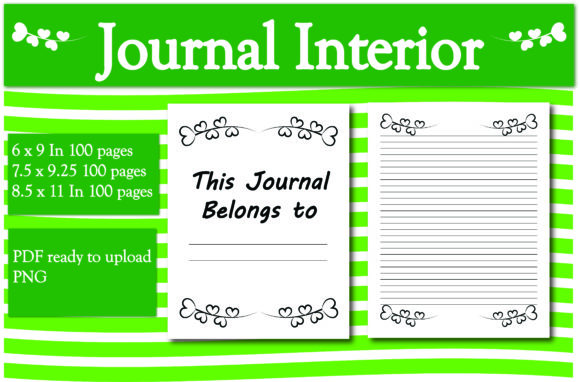
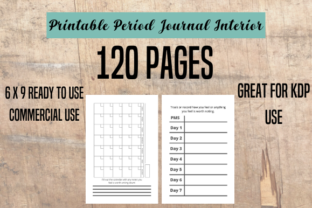
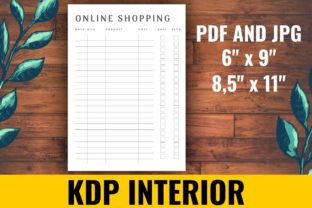
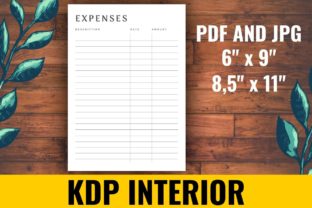
The primary value of this resource lies in its versatility and readiness. A high-quality Expenses Tracker KDP Interior typically includes 100 pages of structured content, offering enough volume for three months of daily tracking or a full year of weekly summaries. By providing files in both PDF and JPG formats, these interiors accommodate different publishing workflows. The PDF format ensures crisp, vector-sharp text and lines for print-ready uploading, while JPG versions allow designers to import pages into software like Canva or Photoshop to add custom covers, branding elements, or unique introductory sections before compiling the final manuscript.
Solving Real-World Financial Chaos Through Structured Tracking
Financial disorganization rarely stems from a lack of money; it usually comes from a lack of visibility. An Expenses Tracker KDP Interior addresses this by transforming abstract spending habits into tangible data points. For individuals living paycheck to paycheck or those attempting to break free from debt cycles, the physical act of writing down expenses creates a psychological friction that digital apps often fail to replicate. When a user purchases a pre-made interior rather than drawing lines on blank paper, they are buying a system, not just stationery. This distinction matters because systems encourage consistency.
Consider the scenario of a household managing variable income. Freelancers, gig workers, and seasonal employees often struggle with traditional monthly budgets because their revenue fluctuates wildly. A standard budget planner might feel discouraging during lean months. However, an Expenses Tracker KDP Interior focused on transaction logging rather than rigid budgeting allows these users to track outflows independently of inflows. They can see exactly where money goes regardless of how much came in that week. This granular visibility helps identify "leakage" points—subscriptions, dining out, or impulse buys—that remain constant even when income drops, allowing for faster course correction.
Small Business Owners and Sole Proprietors
For solopreneurs and small business owners, tax season often brings panic due to commingled funds and lost receipts. While accounting software exists, many micro-businesses still operate heavily in cash or personal accounts during their early stages. An Expenses Tracker KDP Interior serves as an analog backup system or a primary ledger for businesses too small to justify monthly software fees. By maintaining a dedicated physical log, business owners can separate deductible expenses from personal spending in real-time.
This use case extends beyond simple record-keeping. Many creative professionals find that reviewing a physical expense log during quarterly planning sessions provides better strategic insight than staring at spreadsheets. The tactile experience of flipping through 100 pages of recorded history forces a slower, more deliberate review process. Publishers creating interiors for this niche often include specific columns for tax categories, mileage, or client billing codes, making the Expenses Tracker KDP Interior a specialized tool rather than a generic notebook.
Strategic Considerations for Size Selection and Format
Choosing between the available size versions—6x9 inch and 8.5x11 inch—is not merely an aesthetic decision; it fundamentally changes the product's utility and target audience. Understanding these differences prevents returns and negative reviews from customers whose expectations didn't match the physical reality of the book.
- 6x9 Inch Portability: This trim size is ideal for daily expense trackers intended to be carried in purses, backpacks, or glove compartments. Users targeting commuters, travelers, or people who make frequent small purchases prefer this size because it reduces the friction of logging expenses on the go. The trade-off is limited horizontal space, which means columns must be concise and handwriting needs to be compact.
- 8.5x11 Inch Comprehensive Tracking: The larger format suits home-based budgeting, business expense logging, or users with larger handwriting. It allows for more detailed categorization, wider description fields, and additional notes sections. This size is often preferred for monthly bill trackers or annual financial reviews where portability is less important than data density and readability.
The availability of both PDF and JPG formats also influences production strategy. PDFs are generally superior for text-heavy interiors because they maintain sharp edges at any zoom level and result in smaller file sizes for KDP upload. However, if you plan to add decorative borders, watermarks, or customized motivational quotes to each page, starting with high-resolution JPG files may streamline your design workflow. Just ensure the resolution remains at 300 DPI to avoid pixelation in print.
Niche Audiences and Specialized Use Cases
Generic expense trackers face saturation, but specialized applications of an Expenses Tracker KDP Interior thrive. Parents teaching teenagers financial literacy often seek guided trackers that simplify categories and include educational prompts about needs versus wants. Similarly, caregivers managing finances for elderly relatives need trackers with larger fonts and simplified layouts that reduce cognitive load. Wedding planners require expense logs organized by vendor category rather than date. Each of these audiences has distinct needs that a well-chosen interior can address without requiring custom design work.
Travel enthusiasts represent another underserved market. Vacation expense trackers differ from household budgets because they involve currency conversion, per-day spending limits, and category breakdowns specific to tourism (accommodation, transport, activities, souvenirs). Using a standard Expenses Tracker KDP Interior as a base, publishers can quickly adapt the content to serve this niche by adding conversion tables or destination-specific headers, creating a highly targeted product from a versatile template.
Evaluating Quality and Avoiding Common Pitfalls
Not all interiors perform equally well in print. Before committing to an Expenses Tracker KDP Interior, examine the margin specifications carefully. KDP requires minimum margins that vary based on page count and trim size. A beautiful template becomes unusable if content bleeds into the gutter binding area. Verify that the interior includes adequate bleed settings if graphics extend to the page edge, or sufficient safety margins if it’s a non-bleed document.
Paper quality considerations matter too. KDP standard color paper is 55# (90 GSM), which is relatively thin. Interiors with heavy black ink coverage or double-sided printing may cause ghosting. The best Expenses Tracker KDP Interior designs account for this by using lighter line weights, avoiding solid black backgrounds, and potentially leaving alternate pages blank or lightly patterned to prevent bleed-through issues. Testing a proof copy before listing is essential to verify that the chosen interior performs well with Amazon’s current printing standards.
Finally, consider the balance between structure and flexibility. Overly rigid interiors with predetermined categories may alienate users whose spending doesn’t fit neat boxes. The most successful expense trackers provide enough structure to guide organization while leaving room for individual adaptation. Blank description fields, flexible category options, and generous notes areas tend to receive better long-term engagement than prescriptive formats that dictate exactly how users must organize their financial lives.