Monthly Bills KDP Interior: Streamline Self-Publishing
Achieving financial clarity often begins with a simple, consistent tracking system. For self-publishers and low-content book creators, the Monthly Bills KDP Interior serves as both a practical tool for end-users and a strategic asset for publishers. This pre-formatted template eliminates the technical friction of designing functional logbooks from scratch, allowing creators to focus on niche research, marketing, and portfolio expansion. By providing a structured 100-page layout available in both PDF and JPG formats, this interior bridges the gap between creative vision and technical execution.
The primary value of this resource lies in its immediate usability. Designing a functional bill tracker requires understanding margins, bleed settings, gutter safety zones, and line spacing. A poorly designed interior can lead to rejected manuscripts or a frustrating user experience where writing space is consumed by binding glue. The Monthly Bills KDP Interior addresses these technical constraints proactively. Whether you are targeting young professionals managing their first apartments or retirees organizing fixed incomes, having a professionally spaced layout ensures the final physical product is usable, legible, and aesthetically pleasing.
Technical Versatility Across Formats and Sizes
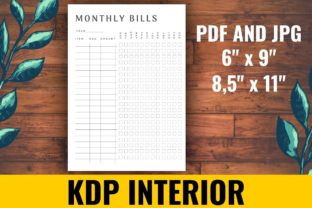
One of the most significant advantages of this specific interior package is the inclusion of dual file formats. While Amazon KDP primarily utilizes PDF for print production, having high-resolution JPG versions offers distinct workflow benefits. The PDF files are optimized for direct upload to KDP, ensuring that text remains crisp and vector-sharp at any zoom level. This is critical for the fine lines typically found in bill trackers, where pixelation can make a book look unprofessional.
The JPG alternatives serve a different but equally important purpose. Marketers and creators often need to showcase the interior pages on social media, Etsy listings, or personal websites without sharing the printable source file. High-quality JPGs allow you to create mockups, promotional carousels, and "look inside" previews that accurately represent the customer experience. This visual transparency builds trust with potential buyers who want to verify that the tracking columns are wide enough for their handwriting or that the font size is accessible.
Size adaptability further enhances the utility of this interior. The availability of both 6x9 inch and 8.5x11 inch versions caters to two distinct market segments. The 6x9 format is portable and discreet, appealing to users who want to keep their financial organizer in a purse, glove compartment, or desk drawer. It feels more like a personal journal than an accounting ledger. Conversely, the 8.5x11 version provides expansive writing space, making it ideal for seniors with dexterity concerns, individuals with large handwriting, or those who prefer to track multiple bills per row with extensive notes. Offering both sizes allows a single design concept to capture a broader audience without requiring additional design hours.
Accelerating Portfolio Growth for Publishers
For entrepreneurs and freelancers in the low-content publishing space, time is the most valuable currency. Creating a unique, functional interior from scratch can take anywhere from five to ten hours when factoring in drafting, testing, and formatting. The Monthly Bills KDP Interior compresses this timeline to minutes. This efficiency enables a volume strategy where publishers can test multiple niches rapidly. Instead of spending weeks perfecting one bill tracker, you can release variations targeting specific demographics—such as "Monthly Bills for College Students," "Household Expense Tracker for Couples," or "Small Business Bill Organizer"—all using the same reliable core structure.
This speed does not necessitate a sacrifice in quality. Because the layout is pre-validated for KDP specifications, the risk of printing errors decreases significantly. New publishers often face rejection due to margin violations or incorrect page counts. With a standardized 100-page count, the spine width calculation becomes predictable, simplifying cover design and ensuring the final book looks professional on the shelf. This reliability is crucial for building a brand reputation; customers who receive a well-constructed book are more likely to return for future purchases.
Enhancing User Experience Through Functional Design
The success of a low-content book ultimately depends on whether the end-user finds it helpful. A generic lined notebook rarely solves the specific problem of bill tracking. The Monthly Bills KDP Interior provides dedicated fields that guide the user through the payment process. Typical layouts include columns for due dates, payees, amounts budgeted, amounts paid, and confirmation numbers. This structure reduces cognitive load; users do not have to decide how to organize their page each month. They simply fill in the blanks.
This guided functionality supports better financial habits. When a user sees a dedicated column for "Date Paid" next to "Due Date," they are visually prompted to track timeliness, which can help avoid late fees. For creators, this means your product delivers tangible value beyond paper and ink. You are selling organization and peace of mind. When describing your book, highlight these specific features rather than just listing page counts. Explain that the 100 pages provide sufficient space for over eight years of monthly tracking in a single volume, or nearly four years if using the two-page-per-month spread variation often included in these templates.
Strategic Considerations and Market Fit
While pre-made interiors offer immense convenience, they require thoughtful implementation to stand out in a competitive marketplace. Because other publishers may have access to similar templates, differentiation must occur at the cover and metadata level. Use the Monthly Bills KDP Interior as a foundation, not the entire product. Your unique value proposition comes from pairing this functional interior with a cover design that resonates deeply with a specific sub-niche and a title that addresses a precise pain point.
Publishers should also be mindful of licensing terms. Ensure that the specific interior you acquire allows for commercial use on KDP and understand any limitations regarding modification. Some licenses permit you to add logos, change fonts, or combine pages, while others require the interior to remain as-is. Modifying the interior slightly—even adding a simple introductory page or a yearly overview section—can transform a stock template into a unique product, reducing the likelihood of duplicate content flags and increasing perceived value.
It is also important to manage expectations regarding customization. If your target audience requires highly specialized tracking fields, such as currency conversion columns or cryptocurrency wallet addresses, a standard bill tracker interior may not suffice. In such cases, assess whether the time saved by using a pre-made template outweighs the need for bespoke features. For general household finance, debt payoff tracking, and small business expense logging, however, the standard Monthly Bills KDP Interior typically covers the essential requirements effectively.
Optimizing Presentation and Marketing Assets
The inclusion of JPG files specifically empowers better marketing. Successful KDP listings rely heavily on A+ Content and secondary images that show the interior. Customers hesitate to buy low-content books when they cannot see the layout. By utilizing the provided JPGs, you can create clear, readable graphics that demonstrate exactly what the buyer will receive. Show a close-up of the header to prove font readability. Display a full-page spread to illustrate density and whitespace. These visual confirmations reduce return rates and increase conversion.
Furthermore, these assets support cross-platform promotion. Bloggers and educators who review planners often request digital review copies or interior screenshots. Having high-quality JPGs ready to share facilitates influencer outreach and affiliate partnerships. For creators running ads, these images can be incorporated into video slideshows or static ad creatives that perform better than generic stock photos of notebooks. The versatility of the file formats transforms the interior from a mere production file into a comprehensive marketing toolkit.
Ultimately, the Monthly Bills KDP Interior represents a balance of efficiency and professionalism. It removes technical barriers for new publishers while providing established creators with a scalable asset for portfolio growth. By leveraging the dual sizes and formats, and by focusing on the practical benefits the layout provides to end-users, publishers can create products that genuinely assist people in managing their financial lives. The goal is not just to publish a book, but to provide a reliable tool that earns positive reviews and sustains long-term sales through genuine utility.