Shopping List KDP Interior: Design & Layout Guide
Creating a successful low-content book on Amazon requires more than just uploading a generic template; it demands a thoughtful approach to user experience and visual hierarchy. The Shopping List KDP Interior is designed specifically to bridge the gap between functional utility and aesthetic appeal for self-publishers. Unlike standard lined notebooks, this interior focuses on organized data entry, categorization, and quick reference, making it an essential asset for entrepreneurs and creators targeting the productivity niche. When evaluating this specific interior, you are looking at a layout that prioritizes clarity over decoration, ensuring that the end-user can navigate their weekly or monthly planning without friction.
The visual personality of this interior leans toward modern minimalism with a touch of organic structure. It avoids the cluttered look of outdated planners while steering clear of the sterile appearance of basic spreadsheet prints. Instead, the Shopping List KDP Interior utilizes clean lines, ample whitespace, and intuitive section breaks that guide the eye naturally from category headers to item rows. This balance is critical in editorial design because it reduces cognitive load. For a publisher, this means fewer returns and better reviews, as customers immediately understand how to use the product. The style suggests professionalism and reliability, traits that are highly valued in the competitive stationery market.
Technical Specifications and Format Versatility
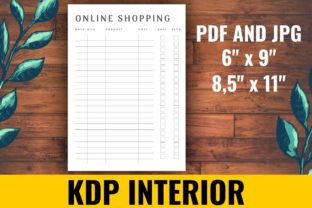
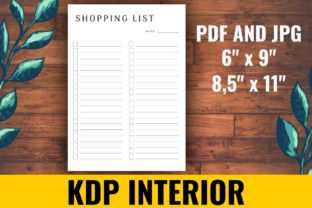
One of the primary advantages of this specific interior package is its comprehensive technical preparation. Self-publishing often involves tedious formatting adjustments, but this resource streamlines the production workflow by providing files in both PDF and JPG formats across two industry-standard trim sizes. Understanding when and why to use each format is vital for maintaining print quality and meeting platform guidelines.
- 6x9 Inch Version: This portable size is ideal for shoppers who need to carry the list in a purse, glove compartment, or reusable grocery bag. The compact footprint forces efficient space usage, making every line count. In terms of design assets, the 6x9 layout typically features slightly wider margins relative to the page width to prevent text from disappearing into the gutter during binding.
- 8.5x11 Inch Version: The larger format serves home-based users, meal preppers, and families who post lists on refrigerators or bulletin boards. This size allows for broader columns, dedicated notes sections, and larger typography for improved readability at a distance. It is also the preferred choice for senior demographics or those with visual impairments.
- PDF Format: Essential for direct upload to KDP. These files are typically flattened to preserve vector sharpness and ensure consistent rendering across different printing facilities. Using the provided PDF eliminates font substitution errors and layout shifts.
- JPG Format: While less common for full interiors, high-resolution JPGs are invaluable for creating marketing mockups, A+ Content, and social media graphics. They allow you to showcase specific pages of the Shopping List KDP Interior in promotional materials without needing complex design software.
Having access to 100 pages of content provides substantial value perception for the buyer. However, experienced publishers know that 100 pages does not always mean 100 unique layouts. Often, this count includes repetitive master templates optimized for bulk printing. This repetition is actually a feature, not a bug, as it establishes consistency—a core principle of effective brand identity. Users develop muscle memory when interacting with recurring layouts, which enhances the overall usability of the book.
Strategic Applications Across Creative Niches
The versatility of the Shopping List KDP Interior extends far beyond simple grocery tracking. Savvy marketers and content creators recognize that "shopping list" is merely a functional descriptor for a structured data-entry tool. By reframing the narrative, this interior can serve multiple distinct audiences, thereby expanding your potential market reach without requiring new design assets.
For health and wellness coaches, this interior functions as a supplement tracker or whole-food pantry inventory. The categorical nature of shopping lists aligns perfectly with macro-nutrient tracking or elimination diet planning. Similarly, crafters and hobbyists can repurpose the layout for supply inventories, yarn stashes, or bead organization. In these contexts, the clean sans serif font choices often found in these interiors ensure that handwritten entries remain legible against the printed grid.
In the realm of small business and retail, the interior serves as a procurement log or vendor contact sheet. Boutique owners and resellers frequently need physical backups for digital inventory systems. A well-designed list interior offers a tactile alternative to apps, appealing to entrepreneurs who prefer analog organization methods. Furthermore, event planners can utilize the structured rows for vendor checklists, decoration inventories, or catering orders. The key to success here lies in keyword research and cover design; the interior remains constant, but the positioning adapts to the specific pain points of each niche.
Evaluating Typography and Readability Standards
Typography in functional books differs significantly from display font applications in logo design or web design. When assessing the Shopping List KDP Interior, readability must take precedence over stylistic flair. The typeface used for headers and prompts should be a robust sans serif or a highly legible serif with open counters and generous x-heights. Script fonts and handwritten fonts, while popular in creative branding, can be detrimental in a utility context if they compromise scanning speed.
Visual hierarchy plays a massive role in user satisfaction. Effective interiors use weight, size, and spacing to differentiate between static elements (like "Produce" or "Dairy") and dynamic input areas. If the Shopping List KDP Interior uses a uniform stroke weight throughout, it fails to guide the user’s attention. Look for designs that employ bold headings, lighter rule lines, and strategic use of gray tones to reduce ink saturation. High-contrast black lines can sometimes cause bleed-through on standard KDP paper, so interiors that utilize 80-90% black for writing lines are often superior for practical use.
Font pairing within the interior itself should be subtle. A common best practice is using a modern geometric sans serif for structural labels and leaving the writing space completely unadorned. This neutrality ensures compatibility with various handwriting styles and pen types. Avoid interiors that include decorative watermarks or heavy background textures in the writing zones, as these interfere with the primary function of the book. Professionalism in low-content publishing is defined by what you leave out, not just what you put in.
Commercial Licensing and Production Best Practices
Before integrating any Shopping List KDP Interior into your publishing catalog, verifying commercial licensing is non-negotiable. Not all design assets available online grant full rights for resale or modification. Ensure your license explicitly covers KDP distribution and derivative works. Some licenses restrict the number of units sold or require attribution, which can complicate automated publishing workflows. Always retain documentation of your purchase and license terms to protect your business against future disputes.
When preparing your files, conduct a physical proof test whenever possible. Screen resolution rarely matches print output accurately. Check for margin safety, especially on the 6x9 version where the binding gutter eats into usable space. Verify that the JPG mockups accurately represent the final PDF output to avoid customer disappointment. Additionally, consider customizing the first few pages to add unique value. Adding a "How to Use This Book" page, a personalized index, or a branded introduction transforms a generic commodity into a cohesive brand experience.
Finally, remember that the interior is only half the equation. Your cover design, title, and backend keywords must align with the specific utility of the Shopping List KDP Interior. If you choose the 8.5x11 version, your cover should communicate "home organization" or "master planner." If you select the 6x9 version, emphasize portability and "on-the-go" convenience. Consistency between the exterior promise and the interior delivery builds trust, encourages repeat purchases, and establishes your reputation as a quality publisher in the low-content space. By treating this interior as a professional design asset rather than a quick cash grab, you build a sustainable foundation for long-term growth.